Nobody taught me how to teach. The classroom did.
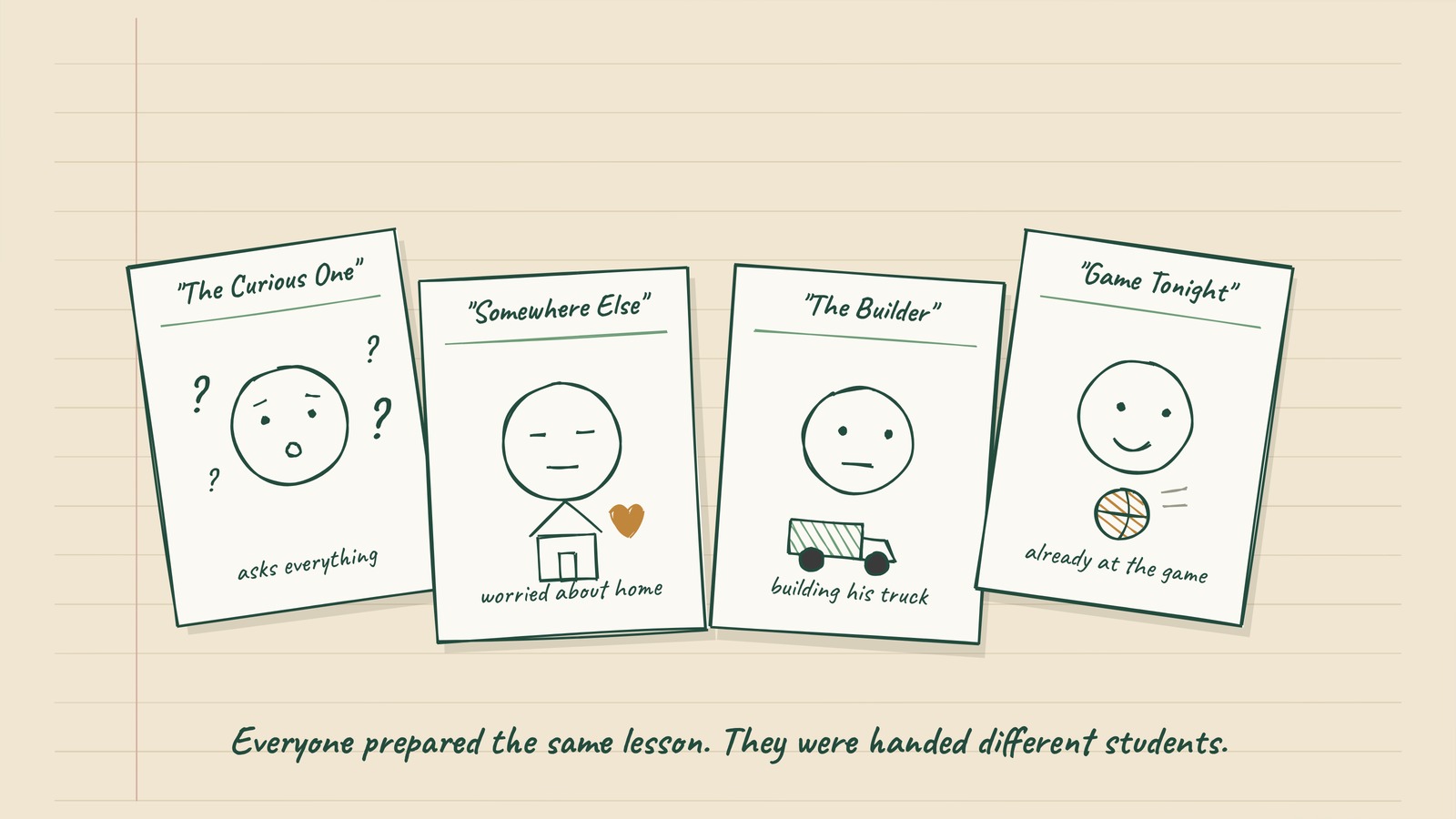
On the first day of a course I taught for future teachers, I asked everyone to bring a lesson. Their best one — something they had prepared and practiced, ready to teach to the rest of the class. Then, before anyone stood up, I handed out cards.
Each card was a student. One was the kid with a hundred questions, curious about everything. One was checked out and worried about something happening at home, not about to participate in anything. One was only thinking about the next modification to his truck and didn't see the point of any of this. Some had a game that night. The room had prepared to teach a lesson. What they actually had to do was teach these people.
I ran it that way because of how I learned to teach, which was not in any classroom I paid to sit in. I had the subject matter down. History and the broad social sciences, I knew cold, and that turned out to be the easy part. The hard part was a room of teenagers asking me questions I couldn't answer, and managing a roomful of them in real time, and planning not just for the semester but for the specific Tuesday in front of me. A few days into my student teaching, 9/11 happened. There is no lesson plan for that. We threw out the week and made sense of it together. Nothing I had studied prepared me for any of it. The experience did.
So when it was my turn to help other people become teachers, I couldn't hand them a real classroom. I could hand them the surprise. When those students got their cards and tried to teach through them, they were frustrated. This wasn't the lesson they had rehearsed. That was the whole point. Teaching was never about the best lesson you have ever written. It is about the people in front of you, and whether you can read the room and adjust so the thing you are teaching actually lands. We spent the rest of the semester on exactly that — hands-on techniques, getting people involved, working through the behaviors you will actually meet instead of the ones in a textbook.
At the end, everyone taught one more lesson. In every single case it was dramatically better than the first. I still hear from those students years later. A lot of them tell me it was one of the hardest courses they ever took, and that it was worth it the day they walked into their own classroom, because they had already lived some version of what was coming.
Here is the thing I keep coming back to. Student teaching works. Doing the real job, with real stakes, while someone helps you through it, is the most reliable teacher we have. Some fields build that in. Teachers student-teach. Nurses and doctors do clinicals and residencies. But most don't. We can't give every IT admin, or analyst, or new manager three months of the real thing before we need them to be good at it. Internships and apprenticeships are great, and not everyone gets one. So the actual work of building education is to manufacture that experience on purpose. Put people in a realistic version of the job, make them do it, let them get it wrong while getting it wrong is safe, and match it to the competencies they will be measured against for real.
That is most of what I spend my time on now. Part of how we do it is with AI — students work with personas that behave like real coworkers and stakeholders, including the difficult ones, so the practice feels less like a worksheet and more like a Tuesday. The tools are new. The idea underneath them is the same one I learned the hard way in front of a class.
We are not all the way there. A manufactured experience is still manufactured, and some of ours land harder than others. I don't know that anything I build will hit quite as hard as that week in September when a room of teenagers and I had to figure out the world with no plan in front of us. But that is the bar. The more real we can make the experience before it counts, the more ready people are when it finally does.